Cader Edwards (1705-1782) moved from Baltimore to the land along the Allegheny Mountains beginning in 1755. First, he moved across the mountains into what is now West Virginia, and then back across the mountain lines in 1764 onto the headwaters of the New River, “a wild region of high hills and narrow valleys, lying between the Blue Ridge and the main ridge of the Alleghanies”. Then he moved across the mountain divide to the Shelby settlement on the Holston River in what is now Sullivan County, Tennessee in the early 1770s
Great Indian Warpath
Stretching from upper New York to the South, the Great Indian Warpath was a series of footpaths used for thousands of years by the Native Americans to trade. The trail became the western border for the colonies following the French and Indian War. King George II’s proclaimed in 1763 that European Colonists must reside on the eastern side of the path, leaving the west for the Native American nations. In time, it became the Great Wagon Road, as Euro-Americans moved west out of the colonial lands into the interior lands held in reserve for the Native Americans.
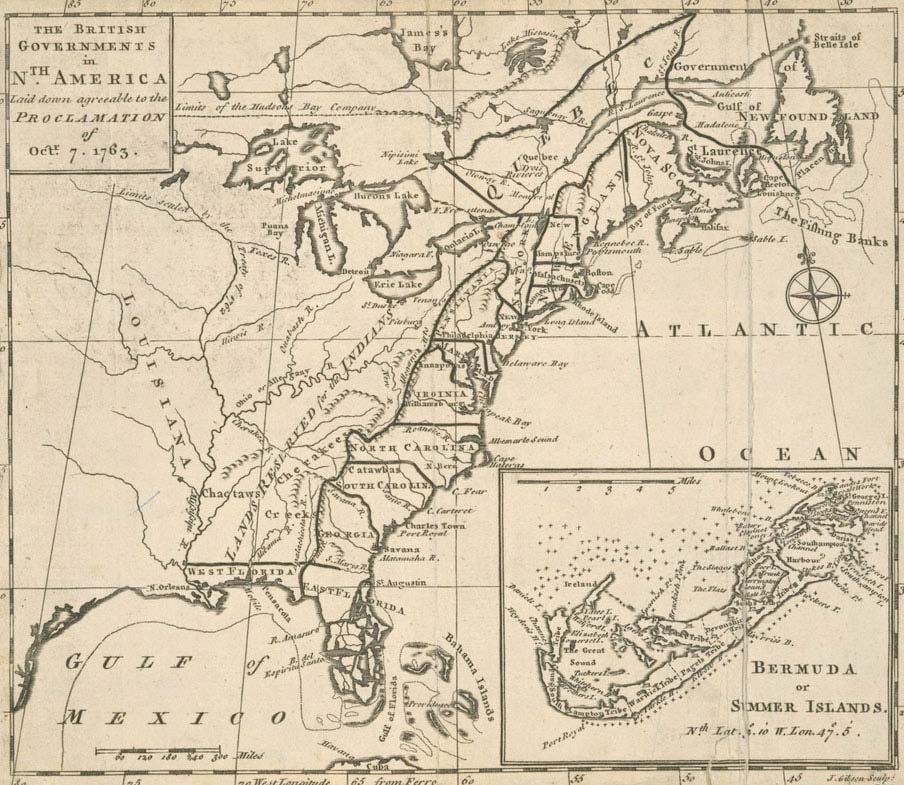
Cader Edwards had settled on land described as “on the headwaters of the James River” and in what is now considered to be Greenbrier County, West Virginia prior to the proclamation on land had been the historic hunting grounds of the Shawnee and Cherokee Indians. With the proclamation, he had been ordered by his King to return to colonial lands. In 1764, he left this area for land on the other side of the line.
Here he remained until the spring of 1764 when he went with several families of his neighborhood, to found a new settlement.
page 12
Squabble State
The Edwards family did not stay in the new neighborhood for more than a few years, and by the early 1770s, had moved to a new Shelby settlement on the Holston, in what is now Sullivan County, Tennessee.
Then, it was land claimed by both North Carolina, Virginia and the Cherokee Indians.
The border between North Carolina and Virginia had not been surveyed that far and Euro-American settlers moving along the Great Indian Warpath south from Virginia into what would become Tennessee long believed that they were still part of Virginia even though North Carolina claimed them.
In 1778, both colonies named and empowered teams of surveyors to determine the border. It was not until 1802 that a compromise was reached between the states.
Holston Settlement
The Holston Settlement, along the Holston River, is considered to be one of the earliest European colonial settlements in Tennessee. Most of the individuals came from Virginia, traveling down the Shenandoah Valley into the Tennessee River Valley. The mountains blocked access from North Carolina.
Evan Shelby, an Indian fighter, settled in the region, establishing a general store, tavern and inn near what would become Bristol, TN. His son, Issac Shelby, came with him to the settlement and together they fought the Cherokee Indians who were trying to keep the European settlers from invading further west. He and his father had fought in Lord Dunmore’s War, which had been a battle over territory near the Ohio River with multiple Native American tribes.
A few years later the Old Captain again moved southwestward, crossing the mountain divide to the new Shelby settlement on the Holston…as he was well acquainted with the Shelby family and with many of the other settlers, it did not seem this time like moving among strangers.
page 12
Chickamauga
In 1776, several Cherokee Indian tribes no longer were intent on conflict with the Euro-Americans due to military setbacks. Some tribes continued to fight against the colonists, following a leader named Dragging Canoe and in conjunction with the British continued to attack colonists who had come into the Tennessee River Valley.
The Indians, incited by the British and the Tories, about this time determined to exterminate the settlers on the Holston… the fury of the storm, coming up the Tennessee and French Rivers, wer met and held back by men of the Robertson, Sevier and Shelby settlements on the Holston and Nolichucky.
page 16
The Edwards family joined the war against the Cherokee and other tribes in order to take Native Americans’ land.
Sources:
The Edwards family of Barren County, Kentucky; history and traditions, by Cyrus Edwards
 Finding the Yellow Bricks