Jethro New enlisted in the 2nd Delaware Regiment and fought in the Battle of Cowpens (Jan 1781). The battle was turning point in the Southern Campaign of the Revolutionary War, as it was a decisive victory for the Continental Army.
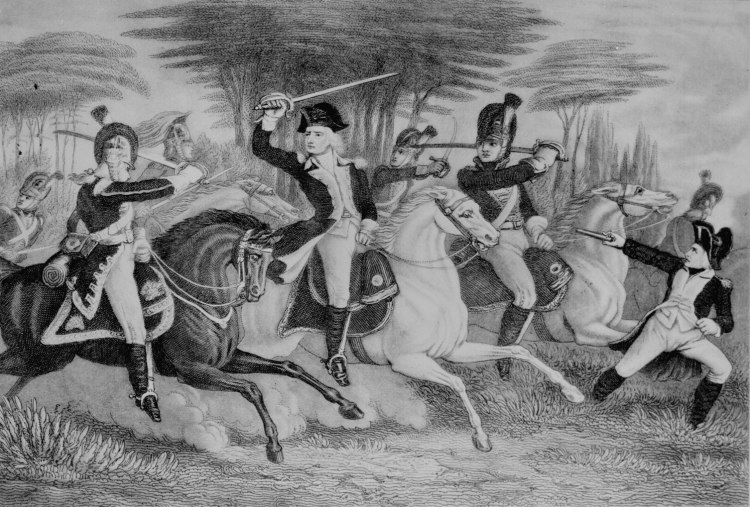
Battle of
Cowpens
Cowpens is located near the border between the Carolinas in the backcountry of South Carolina. In the Southern Campaign of the war, Gen. Nathaniel Green sent Daniel Morgan and his men to harass the British outposts, to forage for food, and rally the colonists in the backcountry. Cowpens, itself, was a large meadow where Morgan was able to allow his horses to forage.

British Forces at the Battle of Cowpens were led by Banastre Tarleton, the third son of a wealthy merchant from Liverpool in England. He purchased his commission in the dragoons. Rapidly rising through the ranks, he acquired the nicknames “Bloody Ban”, “Butcher” and “Green Dragoon”.
While he had won other battles earlier in the war, the Battle of Cowpens left his forces defeated and he had been forced to escape, retreating back to Cornwallis.
In the family histories of Jethro New, they claim that at one point New had been captured by the British, one specifically naming the “Butcher Tarleton” and that New had been tied to a British horse and forced to walk sixteen miles behind it, barefoot. It is unclear if this happened after the Battle of Cowpens, where both are said to have been. Reports of the battle claim 500 British men were captured but only number a handful of wounded or killed Continentals.
American Forces at the Battle of Cowpens were led by Daniel Morgan, a retired battlefield tactician who returned to the Revolutionary War after the Battle of Camden which had been a disaster for the Continental Army. The Delaware Regiment had been reduced to two companies as a result of the Battle of Camden.
The Battle of Cowpens is said to be a rare example of a successful double envelopment, as Morgan deployed his men into three rows.
He placed the riflemen first, then the miltia, and then the regular army in the third row. This eased the British army into complacency while the Americans continued the onslaught during the battle. William Washington and his calvary emerged as the second line retreated into the third, finishing the onslaught. Morgan received awards for his strategy during the Battle.
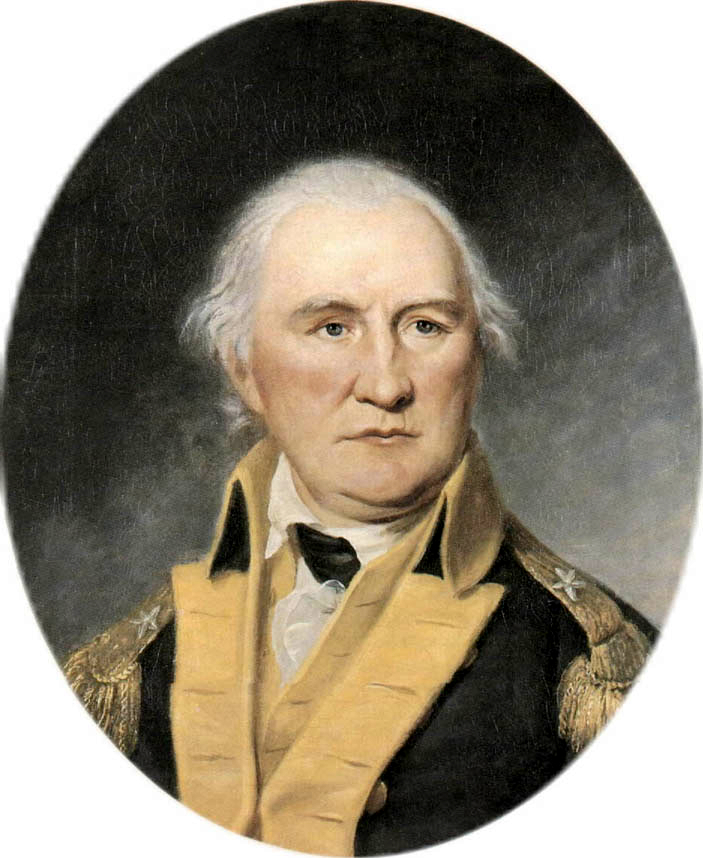
As a member of the 2nd Delaware Regiment, Jethro New would have been in Morgan’s third line, as the Continental Regulars were used to finish off the British. After the Battle, the American forces went to Guilford Courthouse, where they again faced battle, though the outcome was not as decisive.

 Finding the Yellow Bricks