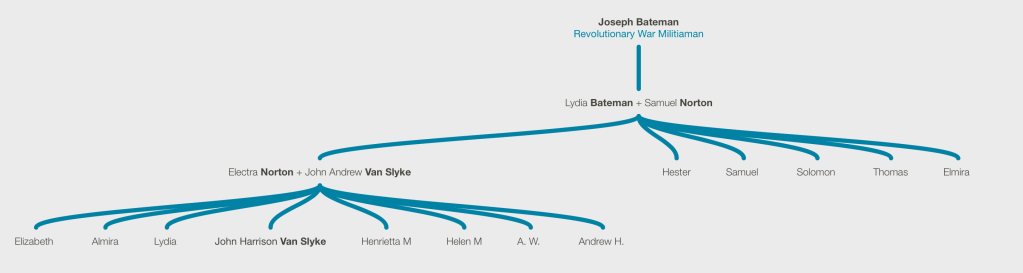
In 1832, living in Rutland County, Vermont, Joseph Bateman applied for a Revolutionary War Pension based on his service in the Massachusetts Militia as a private and a corporal. He served almost a full year in the war, the first six months as a private, the remaining five months and a quarter as a corporal.
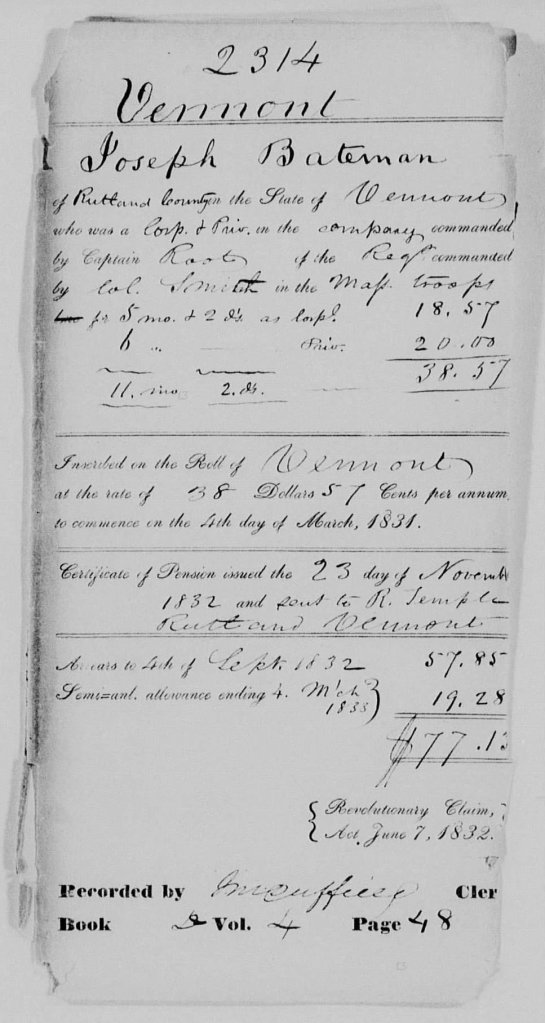
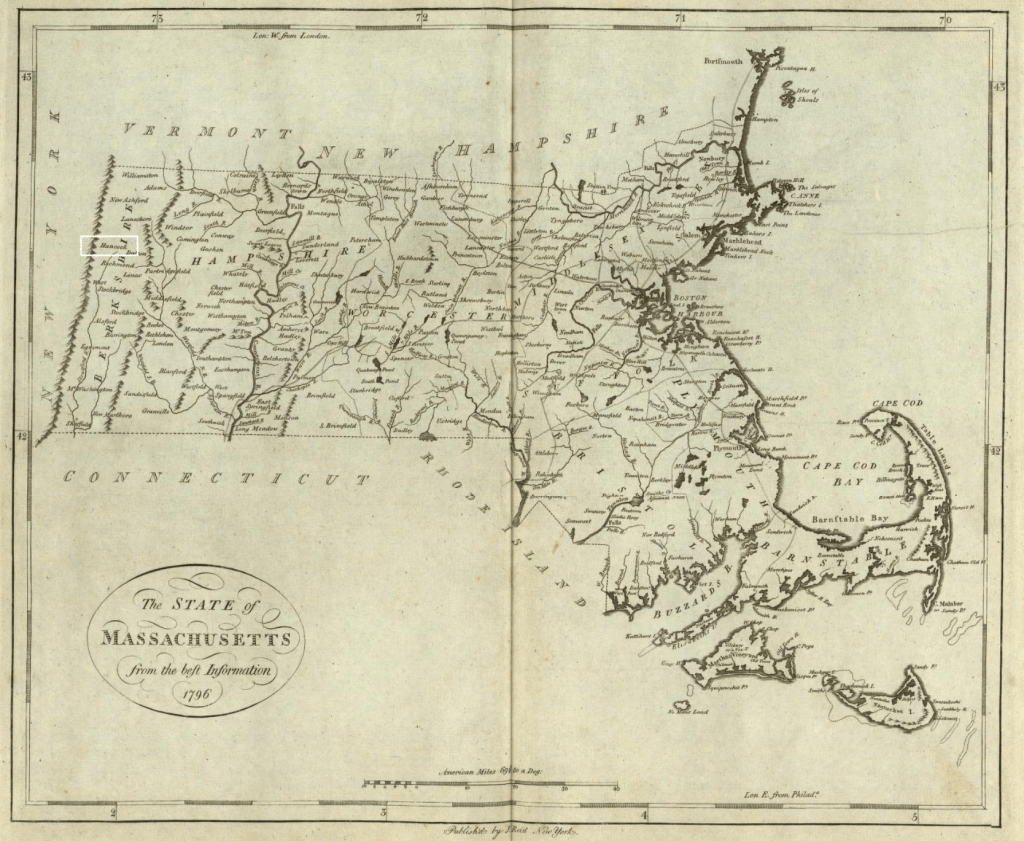
In 1776, Bateman was living in Hancock, Massachusetts. He enlisted and marched to “the city of New York where he was when Independence was declared. He was at N. York when it was captured by the British and retreated to Harlem Heights and was discharged at Croton Bridge.”
His pension application includes an affidavit from Zadock Bateman who states that he was living at his father’s residence in “the Town of Hancock in the County of Berkshire”. Hancock, Massachusetts is in the western part of the colony, near the New York Colony border. After the Revolutionary War, several families living in and around Hancock converted to the Shaker religion and it became a Shaker community. It does not appear that Bateman was living there at that time.
The British captured New York City in late August 1776 and occupied the city for the next seven years. Zadock Bateman’s affidavit details that “when the British Army took possession of New York, said Joseph was on guard and was compelled to escape in such haste when the guard was taken off by Gen Putnam that he abandoned his pack … his Father on that news went immediately to the Army to carry him another change of clothing.”


September 1776 | Battle of Harlem Heights
Washington withdrew his troops from Long Island at the end of August and gathered them in Manhattan. By mid-September, the British again attacked the gathered troops on the eastern short of Manhattan along the East River. The arrival of British troops caused the Americans to flee. Despite the initial chaos, the battle was a victory for Washington and revived morale in colonists.

White Plains
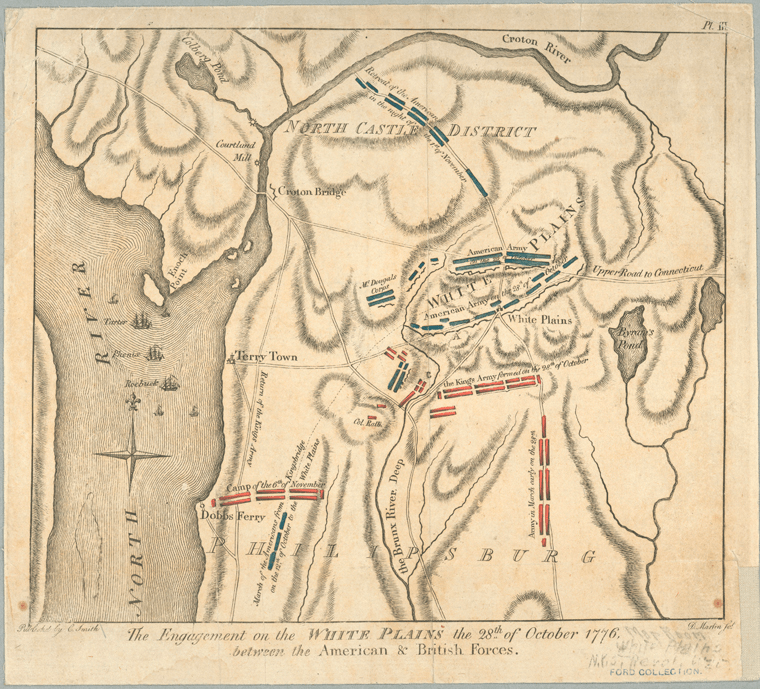
After the Battle of Harlem Heights, Washington took his troops north of New York into Westchester County and to White Plains. Here, near the Croton River, Bateman was discharged from his first round of service in the war.
After his first discharge from the Massachusetts Militia, he joined the Army again as a “regular” and served at Albany and in Vermont, where he would settle after the war.
 Finding the Yellow Bricks