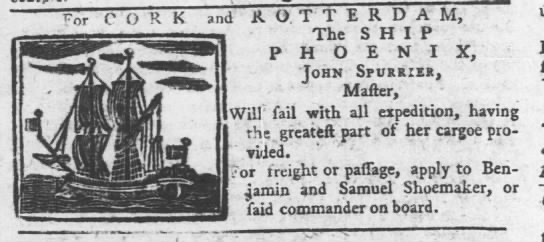
Georg Volpp arrived in Philadelphia in 1751 as part of a wave of German migration to the British Colonies. His ship, the Phoenix, sailed from Rotterdam via Portsmouth, to Philadelphia.
Flight
Religious wars had decimated the central Europe, with Catholic and Protestant forces battling for control. The aftereffects of the Thirty Years War was still reverberating through the communities, almost a century later. Some areas of the conflict experienced population declines of over 50% and the impact of destroyed lives and destroyed property brought famine and disease. And peace had not come with the Treaty of Westphalia as subsequent conflicts came.

In the late 17th and early 18th century, the British government offered refugees opportunities in Britain, Ireland and the colony of New York. Additionally, in the late 17th Century, William Penn, the proprietor of Pennsylvania, traveled to the Rhineland to advertise his colony as a new world free from religious persecution. As a result, non-English speaking people from the continent began to immigrate to the colonies. Many coming from the southwest region of Germany, the areas known as the Rhineland, Palatinate, Wurtemberg, Baden, and German Switzerland. Many were tradesmen and artisans.
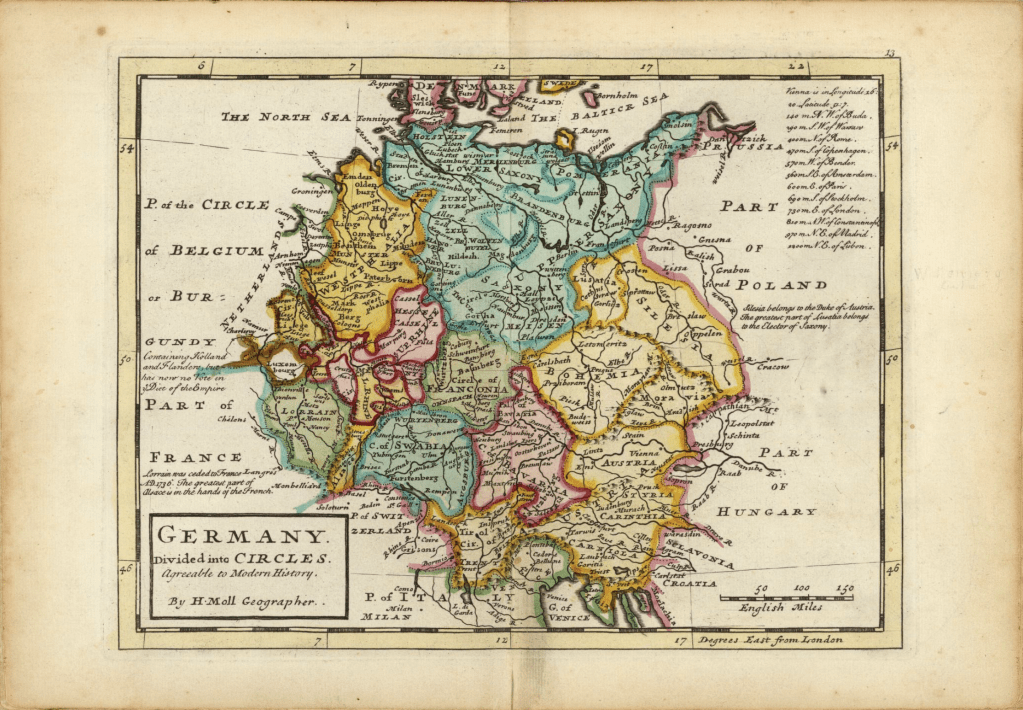
Georg Volpp’s arrival in 1751 corresponded with a peak in immigration of settlers from the Rhineland that occurred at the end of the War of Austrian Succession (1740-1748) in which European powers fought for dynastic control of the Hapsburg Empire, and another war where the armies marched across the countryside of Central Europe and the Rhinelands.

Oath
The Atlantic seaboard had been primarily colonized by agents of the British crown and were subject to the British Government. When Penn sailed to the Rhineland to advertise his proprietary colony as a haven from religious persecution, they followed him back. The influx of non-English speaking “foreigners” frightened the authorities and in 1727, began to require adult males to take oaths of allegiance.
“It’s requisite that in the first Place they should take the Oath of Allegiance, or some equivalent to it to his Majesty, and promise Fidelity to the Proprietor & obedience to our Established Constitution” — Patrick Gordon, Governor of Pennsylvania
As a result, there are ship lists of “foreign” passengers arriving in the colonies. In 1751, Georg Volpp was recorded taking the oath of allegiance upon his arrival on the ship commanded by John Spurrier.


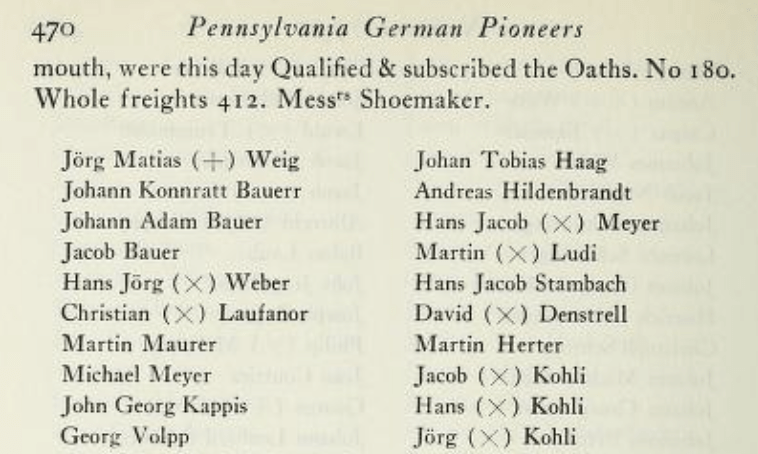
As they only listed the males who took the oath, we do not have direct record of whether or not Georg Volpp travelled with his family or if he travelled as a single man. There were no other adult males Volpps on the ship, suggesting that he and any family were the only of their direct kin group.
 Finding the Yellow Bricks