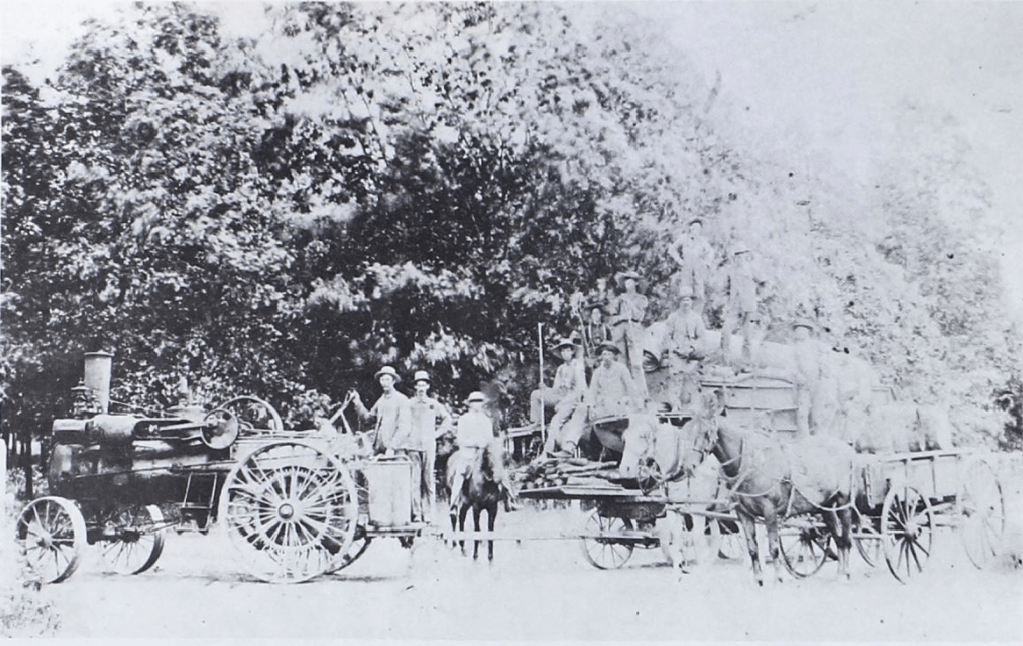
From Lest We Forget by Jewell Lewis Campbell Picture of the Threshing Machine Operation. The author presupposes Robert Lewis is on the Engine
Robert Lewis partnered with Richard Kelley to form a threshing machine operation in Newton County, Missouri. Their business operated from the 1890s to at least the 1920s. The Lewis and Kelley farms were adjoining to each other.
In her book, Lest We Forget, Jewell Lewis Campbell recalls a financial record from the Advance Thresher Co. in which Robert Lewis bought the thresher for $1700. In today’s dollars that is equivalent to about $49,000.
Mrs. Campbell recalls being excited to visit the engine and threshing machine as a child when the operation was in action due to the great smoke stack and big long belt.
Men drove bundle wagons alongside the separator as they pitched wheat into the machine. The separator used great steel teeth to remove the grain from the straw and the blower piled the straw into stacks which the children didn’t play in.
Cader Edwards (1705-1782) was a Welsh maritime captain who followed the sea for thirty-three years. He claimed his home in Wales for many years as he sailed to “most parts of the known and civilized world”, until in 1750, he switched his home to Baltimore. He had a married sister living there and his parents had died.
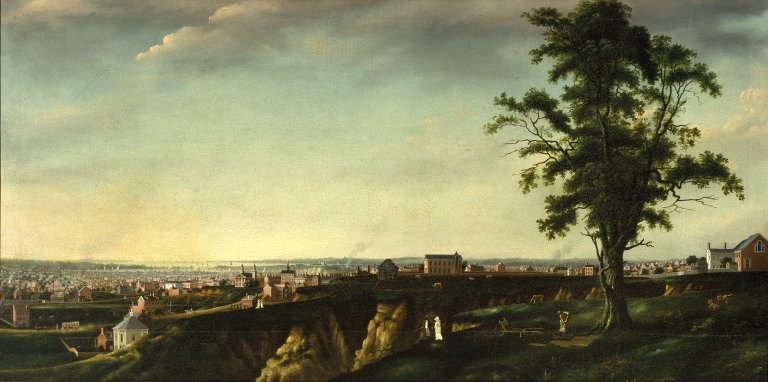
In the 1750s, when Edwards came to Baltimore, it was slowly expanding by filling in the marshes. The Baltimore Sun ran an article in 1914 claiming that in 1752, Baltimore only had 27 houses which included a church and two taverns.
His landlady was a very worthy widow who was well along in years and was an invalid, and the only other member of her family was an unmarried daughter of about twenty-five years of age.
History of the Edwards Family, p 10
Edwards took lodging in one of the houses where he met Mary Gordon, the daughter of the landlady. He would sit and “indulge himself in an extensive course of reading”. The two were married in 1754.
Port, Town, City
1661
David Jones settles the area around the Patapsco River and his settlement becomes known as Jones’ Falls.
1706
The General Assembly established a “Port of Baltimore” at the head of the northwest branch of the Patapsco River for the tobacco trade.
1729
The General Assembly established the Town of Baltimore and several German settlements were created in the nearby areas. The Act established 60 acres of land.
1732
The General Assembly formerly renames Jones’ Fall as Jones’ Town.
1745
Jones’ Town and Town of Baltimore are merged.
1763
Fell’s Point is established as a shipbuilding port.
1797
Jones’s Town, Fells Point and Baltimore Town merged creating the city of Baltimore.
View of Baltimore from Chapel Hill in 1802 | wikipedia.org
Joseph Murphy (b. 1734) was a Baptist preacher in the backcountry of North Carolina. As a popular preacher, he was accused of being a Regulator.
The Great Awakening
George Whitfield Preaching | History.com
The Great Awakening transformed the religious landscape of colonial America in the mid 1700s. Ministers, like George Whitfield, transfixed crowds with their preaching and invigorated many individuals into a “new birth”.
New denominations: the Methodists, the Baptists, and the Presbyterians, saw themselves as a New Light and separated themselves from the established Old Light (Anglicans, Quakers, Congregationalists).
In the Southern Colonies, where the Anglican church had long been established, the more personal nature of the churches inspired by the Great Awakening was a break from tradition.
Joseph Murphy’s Awakening
Born in Spotsylvania County, Virginia, Joseph Murphy was 23 years old when he converted by the famed Shubal Stearns. Both Joseph and his brother William became preachers. He was 26 when he became ordained as a Baptist minister.
Shubal Stearns was a prominent Baptist of the Great Awakening and formed the Sandy Creek Association. Morgan Edwards describes it as the “mother church, nay a grandmother and a great great grandmother. All separate baptists sprang hence.” Joseph Murphy, converted by Stearns, was one of the preachers who helped to spread the word “such that her converts were as the drops of the morning dew.”
He and his brother were known as the “Murphy Brothers”, traveling through Halifax and Pittsylvania County in Virginia — their preaching was popular and “effective” according to Robert Semple who wrote a history of the Baptists in Virginia.
After this work in Virginia he moved to North Carolina.
There, he began his ministry in Anson County, North Carolina, where he baptized several in the Little River of the Pee Dee River in 1759. The next year, he had moved with his wife and other congregants to Deep River, NC.
They extended their labors through all that region both north and south of the Rocky River so that in three year’s time the home church had increased to five hundred members.
Paschal, Spread of Separate Baptists
[Joseph Murphy’s] success is no less surprising than his conversion. He was once wicked to a proverb, and now an eminent christian and a useful preacher.
Morgan Edward
Morgan Edward, a Baptist preacher from Wales, visited congregations in the 1770s and compiled notes about the history of Baptists in America.
Sandy Creek Baptist Church | ncpedia.org
The Regulators
Murphy’s role in the spread of Separate Baptists also happened during a time of civil unrest in the backcountry of North Carolina.
Economically, there was frsutration over taxation. The settlers there, in the Piedmont and Mountains, were being taxed at the same rate as those who had plantations on the Coastal Plain. The contrast in ability to harvest bountiful crops created resentment among the backcountry settlers.
Socially, there was unease as those in power watched the spread of a religious fervor that was quite willing to separate from and leave behind the established religious traditions of the Anglican church.
In 1764, William Tryon, the colonial Governor of North Carolina, fueled these flames of civil unrest by building a grand palace for himself, using the taxpayer’s money.
This unrest culminated in the Regulator movement, in which the backcountry settlers wanted to regulate their own affairs, separate from Governor Tryon and his tax collectors, sheriffs, judges, and county clerks.
In 1770, a mob seized an agent of the crown, Edward Fanning, and assaulted him.
Edward Fanning | wikipedia.org
Fanning’s Accusation
Joseph Murphy, a popular and prominent Baptist preacher, was accused by Fanning as “aiding and abetting the Regulation.”
The Battle of Almance ended the Regulator Movement in 1771, and Tryon made a “triumphal tour” through the Regulator country. During this tour, a party of dragoons had been sent to seize Murphy due to his role in the rebellion. He could not be located and because they could not find him they stole some of his papers and “a new pair of stockings” instead.
Morgan Edward asserts in his notebook that “The Vile Col. F—- accussed him … whereof he was as clear as any man whatsoever.”
Impact of the Regulator Movement
Many of the settlers in the backcountry were “disheartened by the oppression of the officers set over them by Governor Tryon.” After the Battle of Almance, many despaired of having the “redress of their wrongs” and removed themselves farther west.
By 1772, the number of congregants which had been in the hundreds, was now recorded as forty-two.
Jethro New, originally from Delaware, died in Indiana in the 1820s, a veteran of the Revolutionary War and father of a dozen children, several of whom became politicians and religious leaders in Southern Indiana.
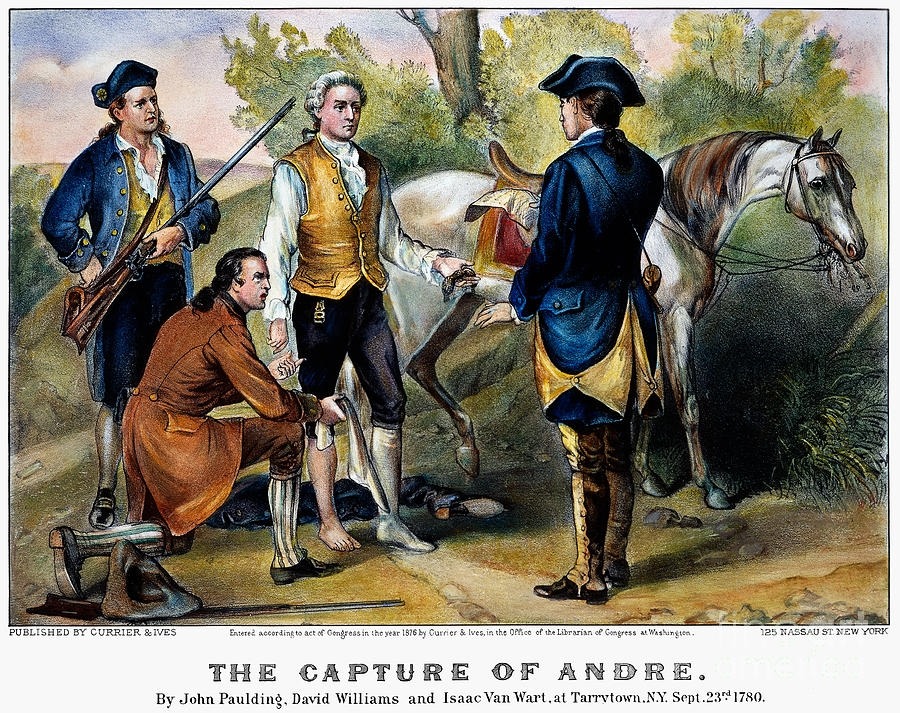
In their biographies and family histories, they recount the tale that Jethro New, as a soldier in the Revolutionary War, was a guard for Major André and witnessed his execution.
Major John André
As a member of the British Secret Service, John André was responsible for corresponding with Benedict Arnold.
In 1780, during a mission, he was traveling through Westchester, New York with correspondence tucked into his boot. He was stopped by patrolling militiamen and the incriminating paperwork was discovered.
He was arrested, convicted and sentenced in a matter of days. He was held in Tappan, New York and in early October of 1780, hanged as a spy.
Henry Neill, of the Second Delaware Regiment
A Membership Application to Sons of the American Revolution states that Jethro New enlisted in 1778 and he served under Col. Henry O’Neill in the 2d Delaware Regiment. The Delaware Archives lists Jethro New as a soldier of indeterminate rank in Henry Neill’s 2nd Delaware Regiment.
Henry Neill was the Lieutenant Colonel of a regiment of Delaware militia that served in northern New Jersey during the summer of 1780. The regiment served the garrison at Dobbs Ferry on the Hudson. They finished their service shortly after the execution of André, and they were sent home by end of November 1780.
Letter from George Washington discharging the Delaware Militia from service near Dobbs Ferry
Dobbs Ferry was situated across from the Palisades and just 5 miles east of Tappan, New York where André was hanged. It was an area of considerable activity between the British and the Colonists. The Delaware Regiment, while stationed there were garrisoned at the earthworks, charged with creating more earthwards and conducted patrols along the river.
In the course of their duties, Col. Neill encountered Benedict Arnold as he arrived in the area on a barge on the Hudson. Additionally, when the British sent men to ask Washington to spare André’s life, they “selected Dobbs Ferry as a point of contact”. In reward for their service at Dobbs Ferry, the Delaware men were each awarded a quart of rum.
Sources
Ancestry.com. U.S., Sons of the American Revolution Membership Applications, 1889-1970 [database on-line]. Provo, UT, USA: Ancestry.com Operations, Inc., 2011. #92427
Delaware Archives. (1912). United States: Star Publishing Company, p. 646
Washington, George. George Washington Papers, Series 3, Varick Transcripts, 1775 to 1785, Subseries 3B, Continental and State Military Personnel, 1775 to 1783, Letterbook 12:- Dec. 31, 1780. 1780. Manuscript/Mixed Material. https://www.loc.gov/item/mgw3b.012/
Andrew Van Slyke migrated to Missouri from Illinois in the 1830s, before migrating to Texas, where he died in 1852. His son, John Harrison, returned to Missouri after his death.
In her book, Tuggle-Van Slyke Cousins, Betty Tuggle Bell wrote that “according to family legend, Andrew Van Slyke and his family came to Mo. with the Trail of Tears.” She proposes a theory that is connected to the removal of Indians from New York, however, a review of records suggest that his family did travel from Illinois to Missouri at the time of the Trail of Tears and that their route was aligned with portions of the Northern Route of the Trail of Tears.
Records
Andrew Vanslyker married Leta Norton in 1824, in Lawrence County, Illinois. By 1830, Andrew Vanslyke is living in Clark County, Illinois with his wife and two children. In 1831, he purchased land in a neighboring county, Cumberland. By 1840, however, he is recorded in the 1840 Census of Missouri, in Short Creek Township.
Migration Trails
The National Road
The National Road was the first federally funded road that connected Cumberland Maryland eventually with Vandalia, Illinois. It opened up the Interior Lowlands to migration in the early to mid 1800s, as it was built between 1811 and 1837. Today, it is mirrored by I-70 and US Route 40.
In its heyday, travel along on the National Road was crowded with Conestoga Wagons and stagecoaches. The section in Illinois was covered with clay.
Clark and Cumberland County, where records exist of Andrew’s residence, are near current day I-70, near the Indiana Border. They are about 140 miles northeast of St. Louis.
It is likely that Andrew used the National Road for his migration from New York, his birth state, to Illinois, and then from Illinois to St. Louis as he migrated into Missouri.
Trail of Tears
In 1830, the Federal Government passes the Indian Removal Act, in which the government forced the migration of Native Americans from their territories in the East to land in the West.
While the Trail of Tears typically refers to the removal of Cherokee Indians from their homelands to the Indian Territory of present-day Oklahoma, the Indian Removal Act oversaw the removal of many tribes, including the Choctaw, the Seminole, Chickasaw, Creeks, etc.
In 1838, President Van Buren ordered the removal of the Cherokee Nation through the use of force by the military. This removal caused the death of 6,000 Cherokees as they made their way overland under the force of federal guns.
Northern Route
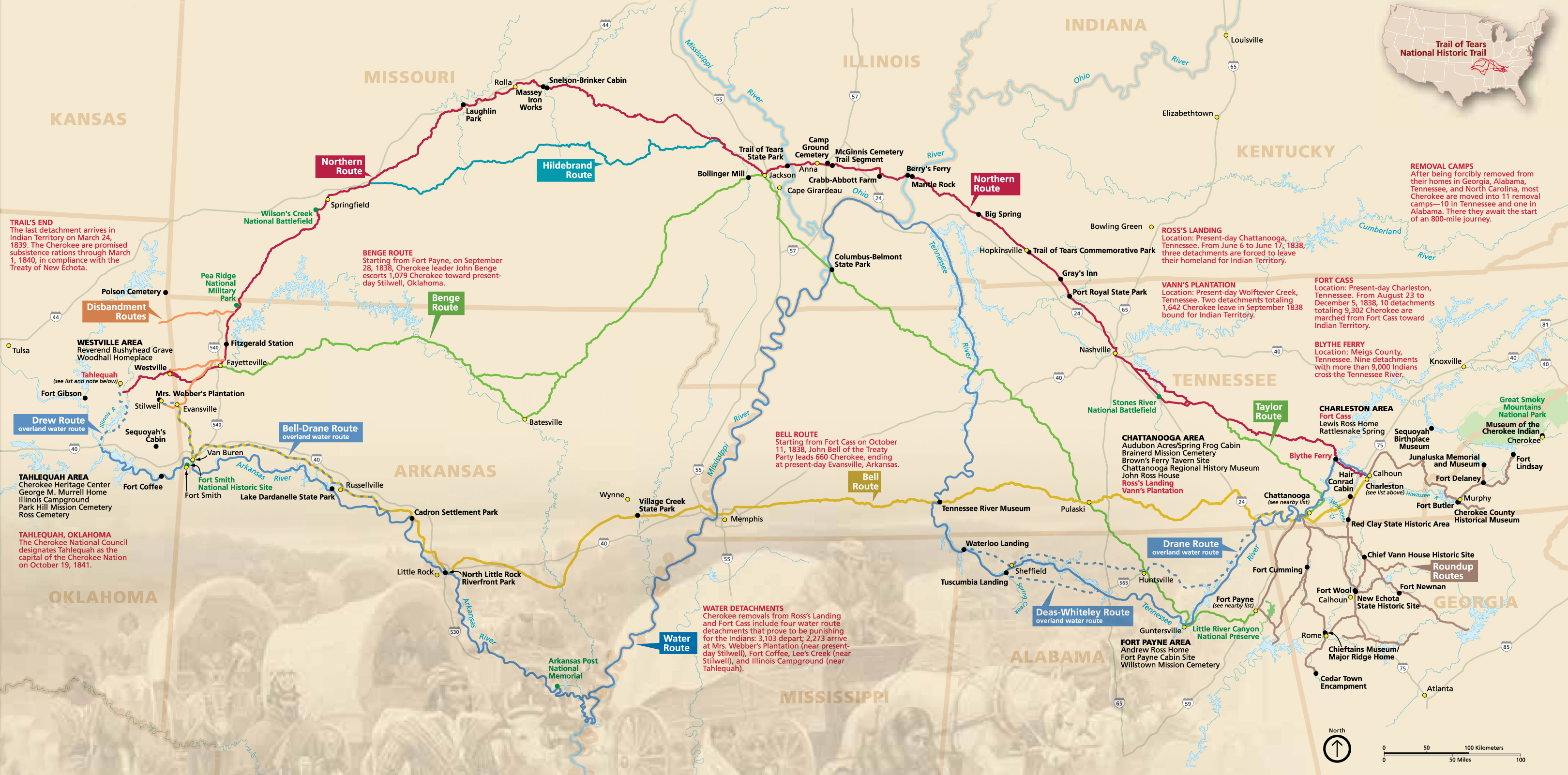
The Northern Route of the Trail of Tears arches into Missouri. It forced the Cherokees from northern Georgia through Tennessee and Kentucky into the southern tip of Illinois before crossing in Missouri.
Once in Missouri, the route traveled northwest to Rolla, MO before following the ridge of the Ozark Mountains to Springfield and turning south in Arkansas before going into Oklahoma.
Map of the Trail of Tears | nps.gov The Red Line marks the Northern Route
The Northern Route, between Rolla and Springfield, is similar to the Osage Trail and the more modern day Route 66 and US Highway 44.
At Springfield, Route 44 diverts from the path of the Trail of Tears and travels westward to current day Newton County, where Andrew Van Slyke settled prior to 1840.
In the History of Cherokee County, Kansas and Representatives, the biography of Christopher Rickner includes this sentence:
Mr. Rickner has been very successful as a farmer, although in the early days he experienced considerable difficulty with the ‘coons, which ate his corn crop.
page 573
He settled in the most southeast corner of Kansas, off of Shoal Creek, before the Civil War and lived most of his life there, his wife dying in 1902 on the farm they settled.
From the 1886 edition of the USGS map showing the SE corner of Cherokee County, Kansas. The green rectangle marks the approximate location of the Rickner land.
In 1903, after his wife’s death, he was plagued yet again by an animal.
The people tell different stories about “that varment seen on Shoal Creek at Rickner’s Bridge.” Baxter people say it tore Mr. Rickner up — but it didn’t.
Galena Weekly Republican, 29 Jan 1903, page 5
Indeed, Mr. Rickner is reported having shot and killed the animal, which “has been terrorizing the people of Lowell and vicininty” in the Galena Evening Times (28 Jan 1903, page 3).
The animal, now dead, was unable to be identified by those who saw it. “Mr. Rickner was in town today and says he will send the body of the animal away to some school to have it mounted and to find out what it is.” Ibid.
Some of the people speculated that the animal had come from its den in a cave where it had been disturbed by explorers, who had ventured in some 200 yards.
The Cherokee County Republican, however, was relieved to find out it was not their dog.
Cherokee County Republican Baxter Springs, Kansas 30 Jan 1903 • Page 8
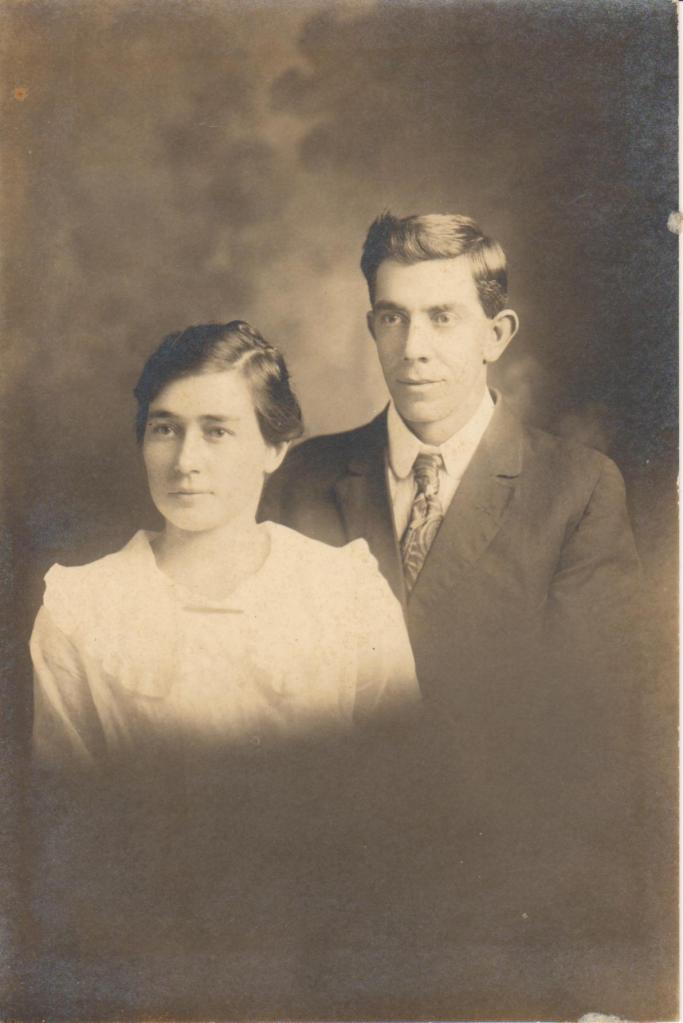
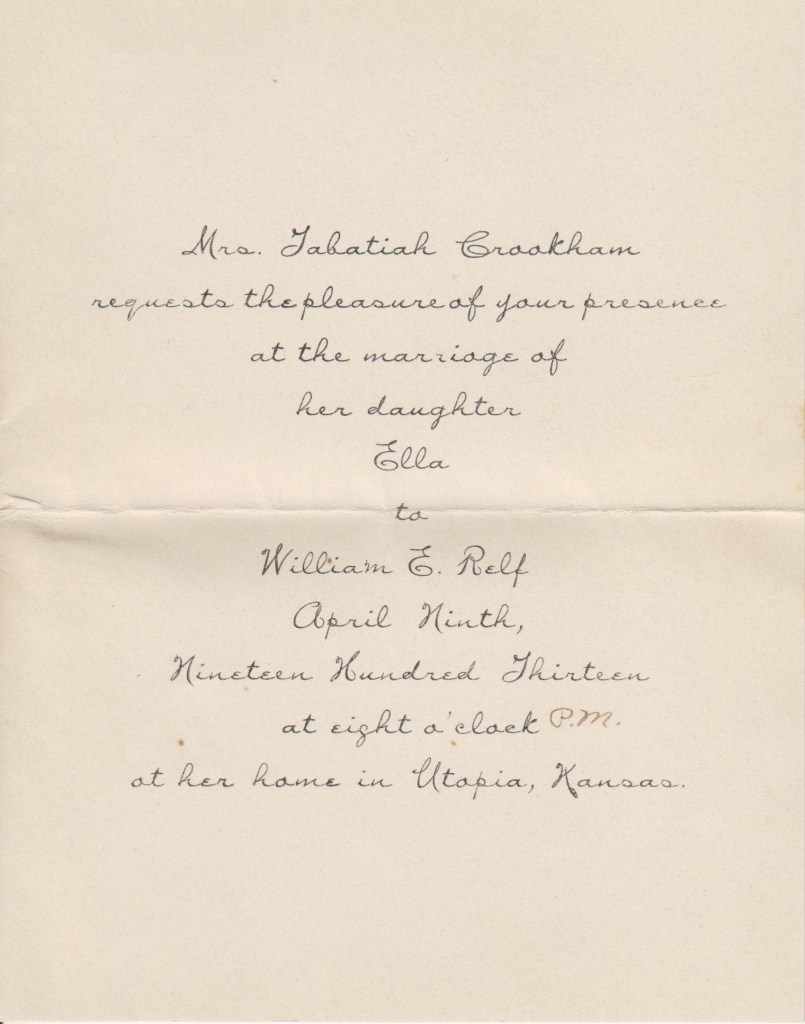
Miss Ella Crookham and Mr. Wm Relf were married in 1913. Both of these people were well known and highly respected according to the Eureka Herald and Greenwood County Republican newspaper.
Undated photo of William Relf and Ella Crookham
Wedding Invitation | Scan of Family Artifact
The wedding took place at the home of the bride’s mother, Mrs. Tabitha Crookham. The wedding invitation lists the town, Utopia and the newspaper announcement lists Bachelor Creek.
Excerpt from 1885 USGS Map of Eureka Kansas, showing Utopia and Bachelor Creek to the northeast of Eureka.
They were married by Rev. F. H. Gillette, the pastor of the Christian church in Eureka. He served the community for three years, resigning in 1915 to serve a church in Nebraska.
Postcard of the Christian Church, Eureka Kansas
The Eureka Herald and Greenwood County Republican Eureka, Kansas 10 Apr 1913, Thu • Page 1
Reported in The Neosho Times on 18 October 1834, page 8
In 1934, on a Wednesday afternoon, Mrs. Wm. Relf hosted the Newtownia Homemakers Club. They opened the meeting with a roll call, answering the prompt, “The Worst Bargain I Ever Made” and participated in a discussion on “What to serve at Club Meetings and Parties.” Guests were invited and new leadership was elected, including Mrs. Wm. Relf as president.
Other articles from The Neosho Times, highlight some of her activities in the club:
Led a discussion on “Feeding the Sick”
Participating in planning committee
Acted as parlimentarian
Came as a guest and became a member
U.S. Department of Agriculture Miscellaneous Publication Number 178 US Dept of Agriculture | 1933
Home Demonstration Clubs
“The Home Demonstration Agent keeps informed regarding all matters that affect the home and brings the latest scientific information to rural home makers in such form that they can readily apply it in practical daily life.”
In the early 20th century, the USDA Cooperative Extension Service initiated the creation of Home Demonstration Work. The home demonstration work was intended to improve the lives of rural families through teaching.
Newtonia Homemakers Club
Their Motto:
“Get acquainted with your neighbor, you might like her.”
The Newtonia Homemakers Club ran reports of their meetings in the Neosho Times beginning in 1933. From these reports, details from the meetings can be gleaned Refreshments were often served, including at one meeting banana pudding and cocoa. Sometimes, they charged absent members one cent, unless the absence was due to illness. They played games and organized picnics and charity drives. Below are some of the roll call prompts and discussion topics discussed.
Roll Call Prompts
Real Funny Joke
How I prepare my meat for canning
Bible Verse
Something I have learned to make mending easier
Something I have done to secure more leisure
A vacation our family has enjoyed
Recipes for Leftover Dishes
Care of House Plants
Favorite Candy Recipe
Favorite Poems
Memories of my childhood home
Favorite Radio Program
Color I think most becoming to me
Making the front porch attractive
A Good Habit a child should be taught
Plants suitable for poor soil
Discussion Topics
How to prevent and treat colds
Ways of Cooking Beef and Port
Dry Cleaning
Feeding the Sick
Care of the sick in the Home
How to best secure Leisure Time
Demonstration on Canning Vegetables
Demonstration on making paper flowers
Demonstration on making candles
Arrangement of Furniture
Attractive Salads
Hobbies
Grandmother’s way and ours
Color Schemes
Spirit of the Home
Floors and Floor Coverage
In 1941, three homemakers threw a party for a Home Demonstration Agent who had worked throughout Newton County with several homemaker clubs.
The Neosho Daily News Neosho, Missouri 02 Jan 1941, Thu • Page 3








 Finding the Yellow Bricks