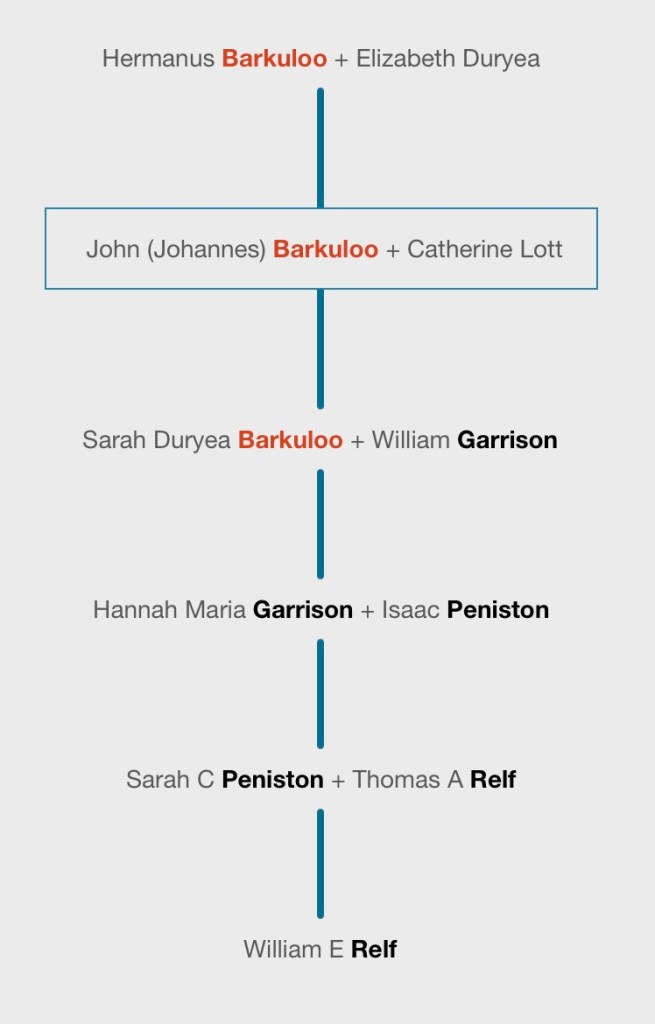
1n 1799, John Barkuloo married Catherine Lott in Jamaica, Long Island and the newspaper reported that they were both of the Narrows.
In 1800, John “Barkulow” is listed in the census for New Utrecht, Kings County, New York with a household of four members:
- 1 adult male 16-26 (inferred to be John)
- 1 adult female 16-26 (inferred to be Catherine)
- 1 female under 10
- 1 other free person excepting Indians
The Narrows
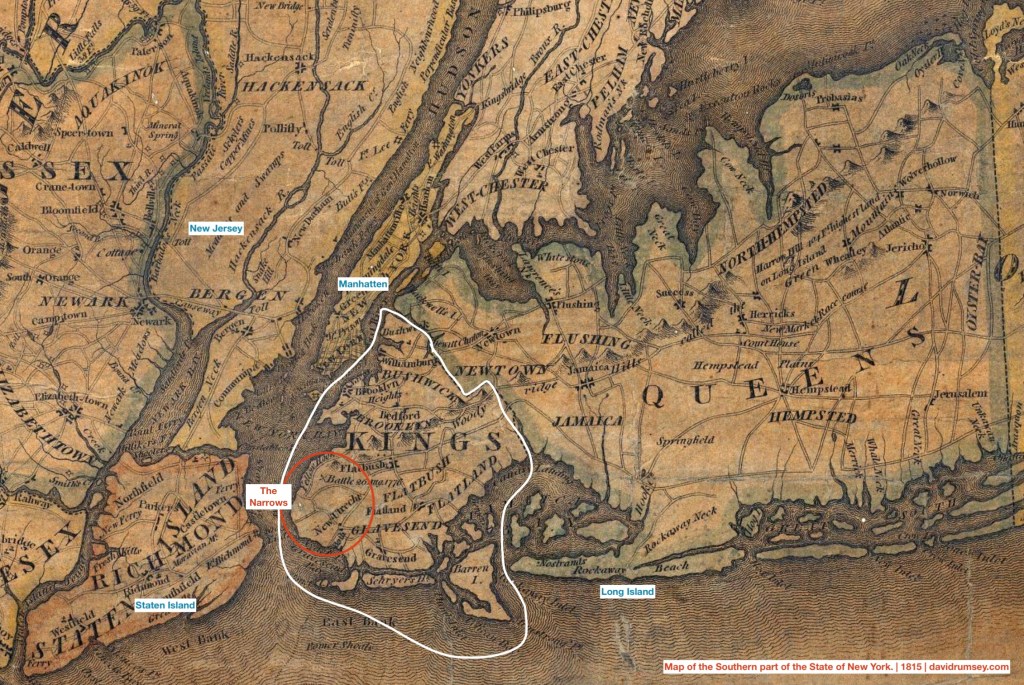
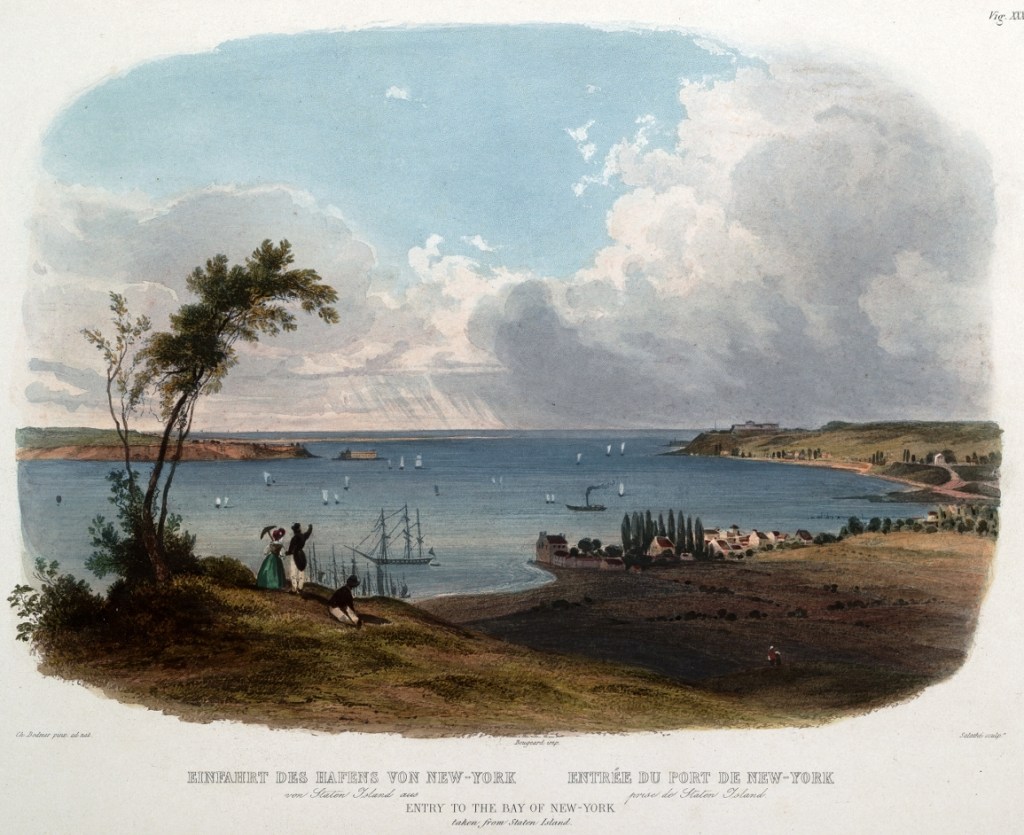
The Narrows is a strait of water between Staten Island and Long Island. As it provides access to the New York Bay and the Hudson River, it is the maritime “gateway” to New York.
The Barkuloo family had lived in New Utrecht, at the Narrows, since their arrival in the 1600s. John Barkuloo’s great-grandfather, William Hermanse Barkuloo married the daughter of Jacques Cortelyou, a surveyor. Cortelyou, on behalf of the Dutch West India Company and the officials of the Dutch colony, surveyed the land that they had “purchased” from the Canarsie Indians. New Utrecht was one of five towns established by the Dutch when they expanded their settlement from Manhattan into Long Island.
In 1706, William Barkuloo was assessed as owning 90 acres of “improvable lands and meadows” in New Utrecht. In 1707, William Barkuloo with his wife Maria, received more land from Jaques Cortelyou and his wife, Aelkie, “bounded south by Helena Tunisse, widow, North by Lawrence Jones, West by Saltwater River and East by Common Woods.” (Vol. I. Kings County land records. Index, Ancestry.com. Historical miscellany | Image 311, record 306). The Barkuloos received lad on land near the Nayack Indians, near where Fort Hamilton would be built in the early 1800s and where the eastern tower of the Verrazzano-Narrows Bridge would be built in the mid-1900s.
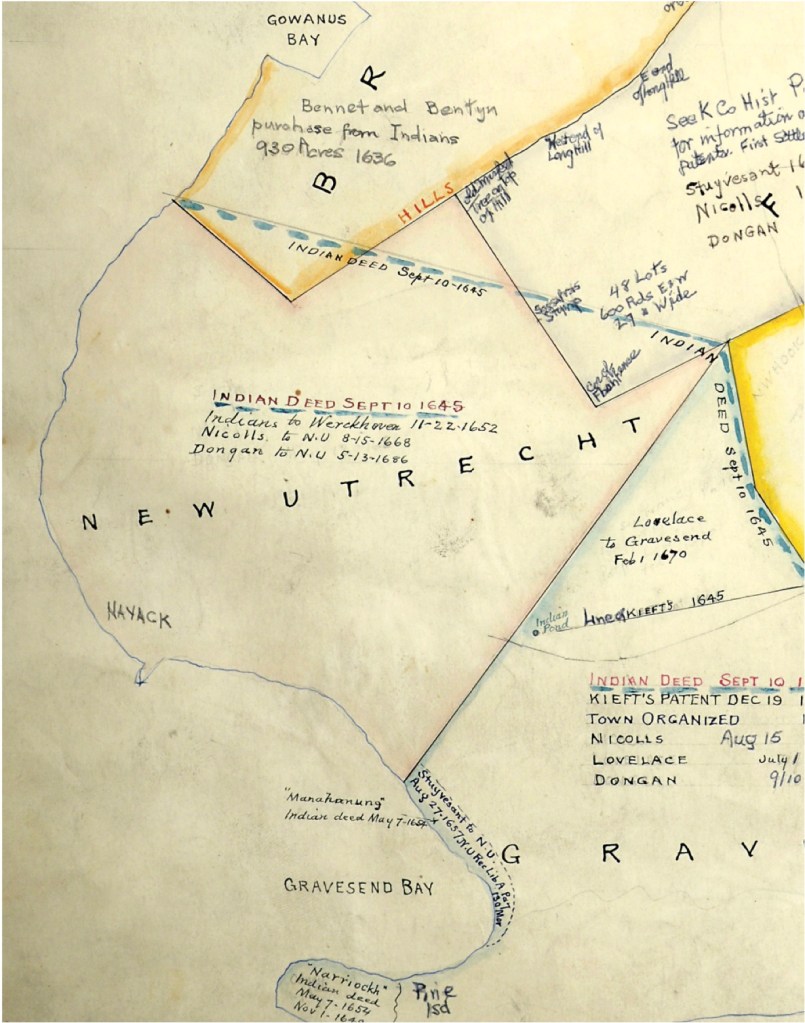
Unknown publisher and date; Brooklyn College Library Archives and Special Collections.
In 1804, Jeremiah Lott surveyed the land of the “Nyack Patent” and identified the parcels of land that were owned by Euro-Americans: among them the heirs of the Hermanus Barkeloo. The map shows three parcels of land north of Nyack point along the shores of the Narrows and across from Staten Island.

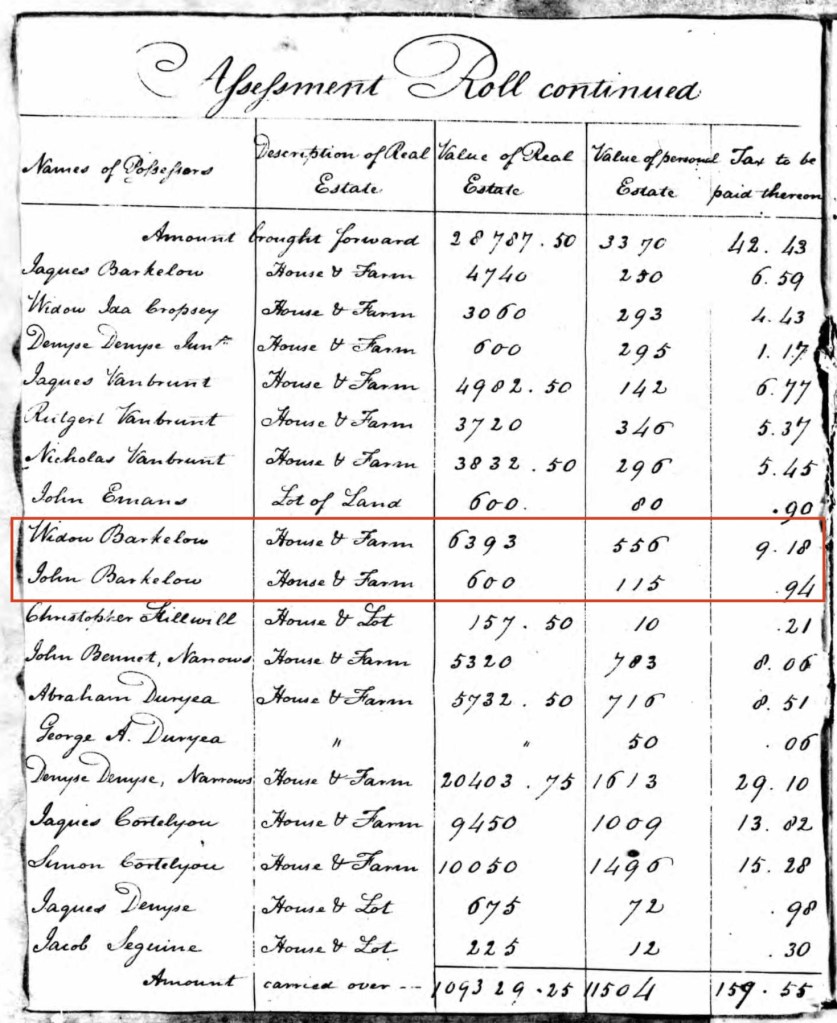
The Widow Barkeloo appears in the Tax Assessment Rolls of Real and Personal Estates, 1799-1801 for King’s County as holding land with a house and farm valued at 6,393 (the currency is not indicated). In 1801, listed immediately after the Widow, is John Barkeloo with land including a house and farm valued at 600.
Agricultural Labor of New Utrecht
The Euro-Americans of Long Island were heavily engaged in the production of agricultural products, including wheat and enslaved the largest population of Black people in the northern colonies. The five towns established by the Dutch West India Company on Long Island were surrounded by large farms and Long Island remained rural into the mid-1800s. The Dutch West India Company brought many enslaved Africans to New York to build the colony and labor in maritime and agricultural economic centers. Cortelyou, as a surveyor for the Company, had used enslaved laborers while engaging in company work. The 1755 Census of slaves for Lower New York lists a “Sarrtje Barkeloo” who enslaved two people one male and one female, in the township of Newuytreght [New Utrecht].
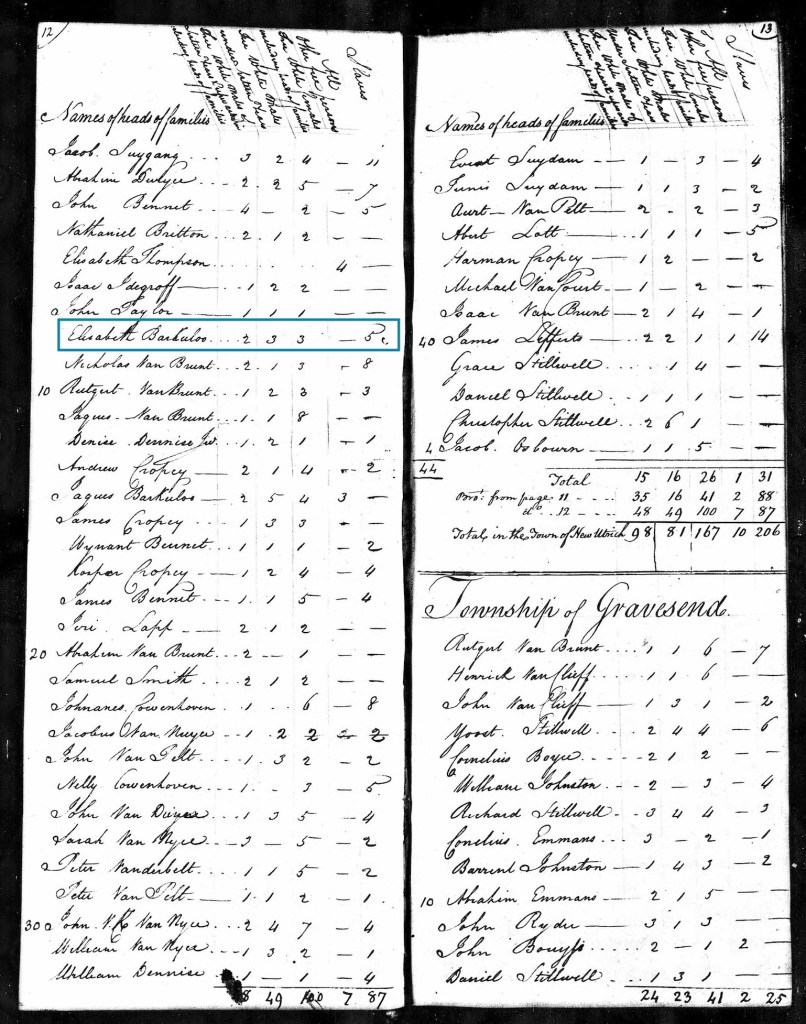
Many of the Euro-American colonists enslaved Black people to work the land, including Elizabeth Barkuloo, the mother of John Barkuloo. The 1790 Census indicated her captivity of 5 people who she mostly likely used to farm her extensive holdings. The 1800 Census shows she increased the number of people she enslaved to 16. John Barkuloo’s record does not indicate slaves, though he has an individual categorized as “all other except Indians” in his household which suggests that he may have used the labor of a free Black person in his household.

 Finding the Yellow Bricks
Are you a Barkuloo descendant?
LikeLike
As with any genealogy — we only have our best guesses based on our evidence, and I think I am. 🙂
LikeLike
I have a hard cover book on this family. It starts in the Netherlands in 1565 and continues through my great grandfather Frederick Barkuloo (Marcus, Charles, John, Harmanus , ….. Bernt Lubberdink) . It includes the John Barkuloo and Charles Barkuloo Bible family pages. I am in possession of both Bibles.
LikeLike
It must be very helpful to access to the family papers. 🙂
LikeLike